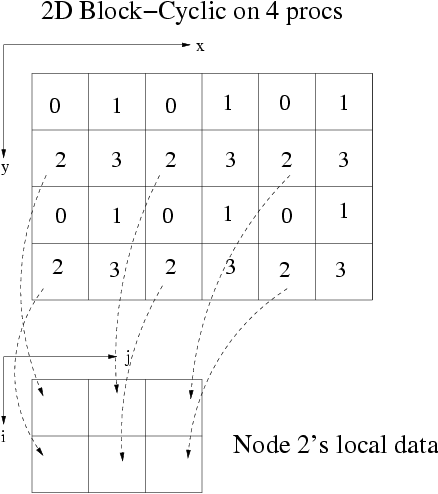
 This scheme, inplemented as a
member of the MatrixManager class
(getDistWindows(...))
returns a distribution layout data structure
(DistLayout). A DistLayout data
structure provides the caller with
This scheme, inplemented as a
member of the MatrixManager class
(getDistWindows(...))
returns a distribution layout data structure
(DistLayout). A DistLayout data
structure provides the caller with
Despite this initially issues, a scheme was developed (and the MatrixManager class extened) to provide any node to determine both local data layout and this local data layout's mapping on to the whole, cluster-wide matrix.
This scheme, inplemented as a
member of the MatrixManager class
(getDistWindows(...))
returns a distribution layout data structure
(DistLayout). A DistLayout data
structure provides the caller with
Aside from obtaining this information and providing the appropriate data to the rendering kernel, the PPVisual class provides a convenient interface to MATLAB. This code as the entry point for the visualization routine, provides error checking, translates some GUI requests into renderable requests (like zoom request, for example) , as well as usable return data (in this case, usually a pixel buffer) for the MATLAB "m-files" and builtin code that makeup the GUI components of the package.